A few weeks ago I had the pleasure of interviewing Helen Legg, the director of Tate Liverpool at an event that marked the temporary closing of the gallery. In our conversation Helen reflected on her vision for the museum which is undergoing an architectural reshape. She spoke eloquently about how the function of the museum has changed since Tate Liverpool opened in 1988 and described how more than ever the art museum needs to be an open space, intellectually, artistically and physically; a place that is welcoming to all visitors. She showed enticing images of the future building, with windows that were previously bricked up, now open to the river and the city.
During the conversation we touched on the subject of interpretation. We both agreed what a vital, but complicated role it plays in making the museum and art within it accessible and interesting. To illustrate this point, Helen shared a story of visiting art museums with her father whose approach to looking at and and making meaning from art was informed by his training and expertise as an engineer. He always, Helen had observed, started with how things were made, the properties they were made from, what held them together. He was inspired by the technicalities of a work, more than its history or iconography. We both wondered out loud how well his interests were supported by any interpretation provided by a museum, given that most wall texts tend to be written by and therefore present the knowledge of those trained in art history.
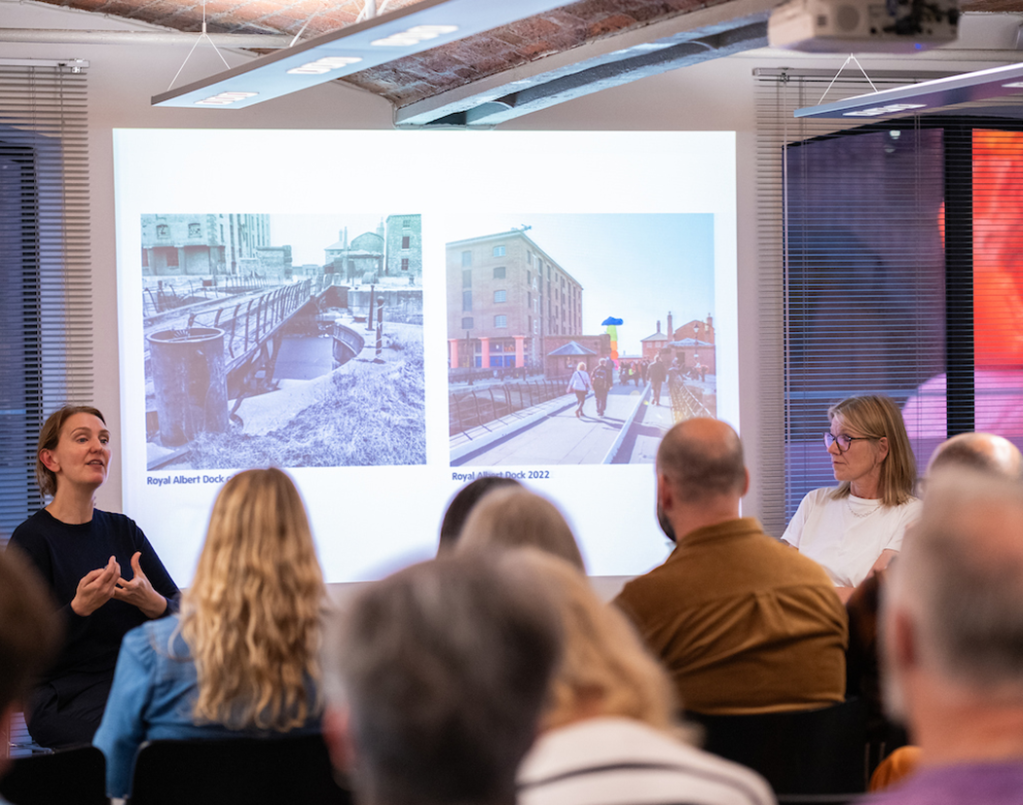
Photo © Mark McNulty
I have been reflecting on this conversation since then and about what and whose knowledge occupies a visible place in the art museum. At the same time I have been thinking about the steps museums take to try and represent multiple and diverse forms of knowledge – a recognised concern of art museums in the UK at least since the late 1960s. Exhibitions and displays curated by artists or members of a local community, or an advisory group of young people are manifestations of this agenda. Similarly, including interpretation texts written by invited individuals with relevant lived experience or specialist expertise are now familiar strategies museums employ to present different perspectives from those of the curators. In my experience, interventions such as these are often bound up with cultural organisations’ attempts to counter critiques of elitism by seeking to be more inclusive, representative of and accessible to a wider demographic.
Inspired by these thoughts I have revisited the brilliant text by Tara Yosso in which she powerfully deconstructs the theory of cultural capital closely associated with Pierre Bourdieu. Drawing on critical race theory (CRT) Tara Yosso moves away ‘from a deficit view of Communities of Color as places full of cultural poverty disadvantages, and instead focuses on and learns from the array of cultural knowledge, skills, abilities and contacts possessed by socially marginalized groups that often go unrecognized and unacknowledged.’ She advances six alternative forms of capital – what she calls ‘community cultural wealth’ – including ‘resistant capital’ and ‘navigational capital.’ Importantly, these are cultural attributes held by Communities of Color which differ from, yet are as important as established cultural capital categorisations from which they are customarily excluded. In making this argument, Tara Yosso demonstrates the fundamental error in assuming that the knowledge and skills of any dominant group are the only ones of value.
One of the many things I take from Tara Yosso’s paper is that the knowledge the museum choses to represent in, for instance, the wall labels, is imbued with considerable authority. Yet this may at best not be the most interesting or relevant to whole groups of museum visitors and at worst may be actively excluding. And while periodically presenting other voices and interpretations in the gallery spaces is a positive step, my sense is that it will take more than this to achieve the open and genuinely culturally representative space that Helen was describing.
 PRAM
PRAM 