Reflections on ‘Learning About Culture’

On Tuesday I attended the launch of the Learning About Culture Programme at the RSA.  This new initiative is described in its prospectus as a ‘two-and-a-half year investigation into the role that cultural learning plays in improving educational outcomes for children.’  The Programme has two aims – to build a stronger evidence base for cultural learning and to improve the use of evidence in cultural learning.  At the launch event which was extremely well attended, from my observation, by representatives from cultural organisations, funders, academic institutions and government departments, we heard from the project partners (the RSA and the Education Endowment Fund (EEF)), from London Bubble who run Speech Bubbles, one of the cultural learning projects taking part and from Project Oracle who are involved in the evaluation.  We also had the opportunity to discuss and respond to the Programme via round table discussions.

Since Tuesday I have been wondering why, even though there is a great deal about this Programme that is constructive and will make a valuable contribution to the sector, it makes me uneasy.  In part to understand my own response, I have put some thoughts down here.
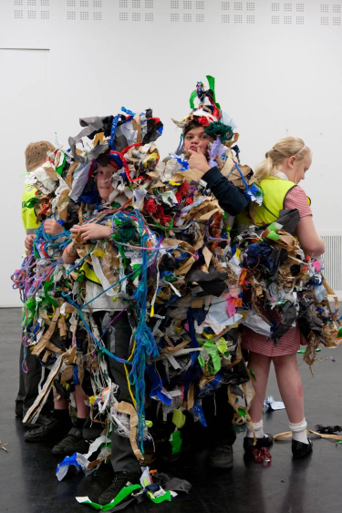
 

Tate Schools picture
Schools Programme Tate Modern, Copyright Tate Photography

As I say there are many positives with Learning About Culture.  The Programme acknowledges that there is a decline in the hours spent learning arts subjects in schools and makes a valid and persuasive argument for more evaluation of arts interventions.  Much is rightly made of the importance of cultural organisations having a theory of change in place about how their activities might lead to change, and a strong case is put forward for these organisations recognising that evaluation and reflective practice can and should focus on improving practice rather than justifying what has taken place for an external funder. They are mindful of the need for more training for cultural practitioners in using evaluation and will be conducting research on the use of evidence in cultural learning. As such the Programme is allied to existing studies including the recent AHRC Cultural Value Project that argue for further research to account for the human experience of art and culture, as well as restating thorny issues that have been around for some time.  Francois Matarasso, for example, outlined a clear case for robust evaluation of arts programmes in the 1990s, using language and arguments that in some respects are similar to that found in the Learning About Culture document.

However where Matarasso and the Learning About Culture programme differ is in the key issue of value, for as he says in the 1996 Defining Values: Evaluating Arts Programmes report; ‘The important, and essentially political, question about evaluation is which value system is used to provide benchmarks against which work will be measured – in other words, who defines value.’  It is in relation to the value system underpinning the Learning About Culture programme that my uneasiness, as a someone working and researching in the arts, surfaces.  The Programme makes it very clear that, in order to make the case for the arts in schools, what is needed is ‘evidence of the additional progress that cultural learning enables children to make.’  This progress is to be assessed primarily in terms of academic achievement and secondarily in terms of ‘non-cognitive skills – a set of attitudes, behaviours, and strategies thought to underpin success in school and at work, such as motivation, perseverance and self-control’.  The main methodology adopted to provide evidence of the impact of cultural interventions in schools is large scale randomised control trials, although there will also be ‘deep-dive’ and follow-up research in schools using a range of methods.

The Programme argues that the focus on providing evidence of the impact on attainment is necessary because first this will help persuade schools of the value of the arts, and second because too often cultural organisations assert that their work makes a positive contribution to attainment without sufficiently ‘robust evidence for the impact on attainment in literacy and numeracy and limited rigorous research into impact on ‘non-cognitive’ skill development or attainment within specialist subject study.’ This is definitely where my uneasiness starts to build into full-scale worry.  There is not space here to restate the arguments made elsewhere on the importance of valuing arts activities on their own terms (although I find the observation in the Cultural Value Project report that we are interested in studying whether music improves ability in maths, but not whether studying maths improves ability in music sums up the issue around subject hierarchies pretty neatly).

Instead I want to reflect on what constitutes robust evidence, comparing the Learning About Culture Programme’s understanding with mine as a practitioner researcher and what this tells us about values.  The Programme has developed a typology of evidence-gathering methods, with each level providing progressively more reliable evidence for impact.  Level 1 includes anecdotal quotes and personal observations rising up through three further levels to end with Level 5 which includes comparison groups or control trials, which are ‘the highest standard’.  In Learning About Culture, therefore, rigour and robustness are intrinsically linked to notions of objectivity and the scientific method.  Underlying this is the belief that it is possible to control the conditions and variables of an art intervention sufficiently to be able to confidently assert causation – i.e. that nothing apart from the intervention under scrutiny is responsible for the measurable change. The knowledge that has value here is that of the independent and objective evaluator who having conducted the tests to determine if progress has been made, defines success.

For those working in collaborative, qualitative and arts and practice-based research scenarios, different value-systems prevail.  Rigour is linked more closely to ideas of research authenticity, applicability and replicability – do the methods and findings ring true to those who have direct experience of the intervention and are they helpful in demonstrating how work might improve in contexts other than the specific one in which the research took place. ‘Objectivity’ is questioned and instead ‘expert knowledge’ and ‘everyday perceptions,’ as Keri Facer and Kate Pahl state, inform the findings and build the evidence base.  Within the arts specifically there is recognition that the practice is complex, not always linear and at times contradictory. Concepts such as joy or irreverence, frustration and being oneself are not measureable, yet can potentially be communicated through a narrative, enacted through a performance or made explicit in a film. These research outputs constitute powerful evidence of change that can be used by practitioners to support reflection on their practice and improve their work.
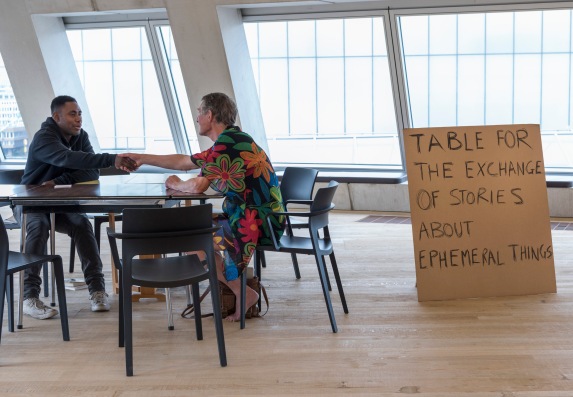
 

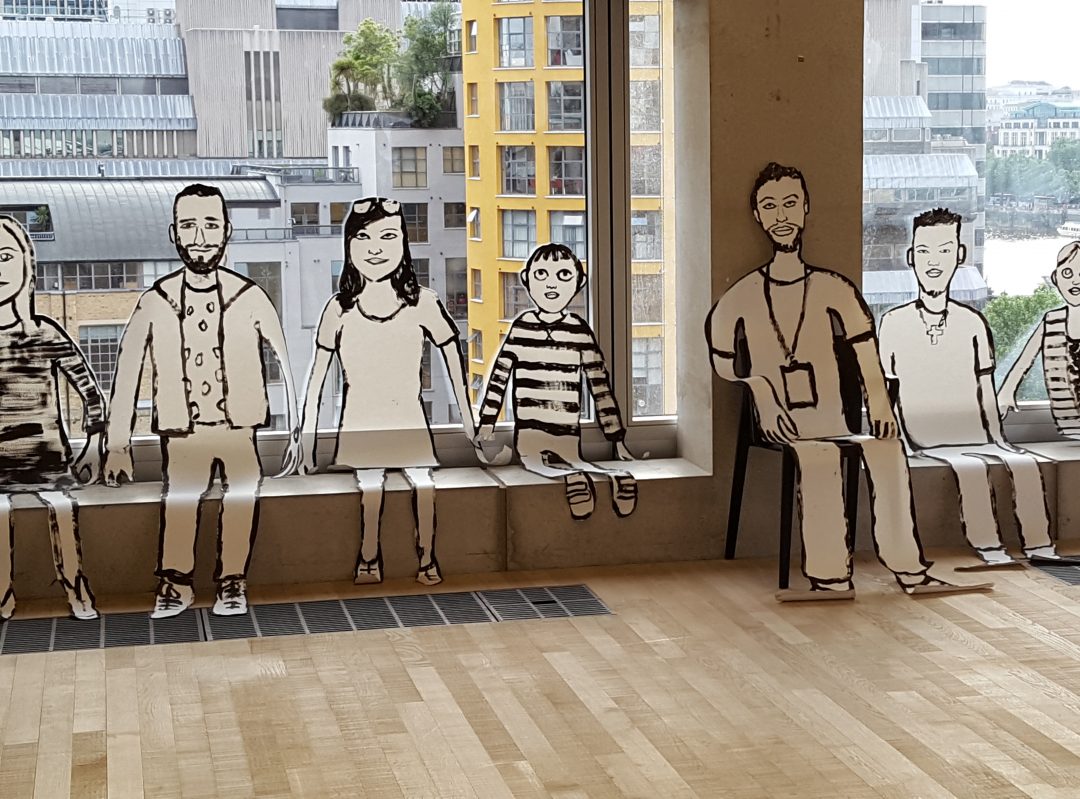
Tate Exchange Event, Tate Modern
Tate Exchange Event, Tate Modern, Copyright Tate Photography

So I am keen to see how the Cultural Learning Programme develops. I welcome their acknowledgement that ‘cultural learning practitioners may also have distinctive strengths when it comes to monitoring, evaluation and learning’ and support their ambition to work with the sector ‘using a broad range of evaluation approaches’. With this in mind I hope that the Programme recognises that RCTs are but one method for assessing and evidencing the changes that cultural programmes can bring about.  In my mind the Programme will achieve something truly extraordinary if it can communicate not only the value of cultural learning, but also the importance of evidencing it in rich and complex ways that resonate for practitioners, educators and policy makers.

Mapping the Literature

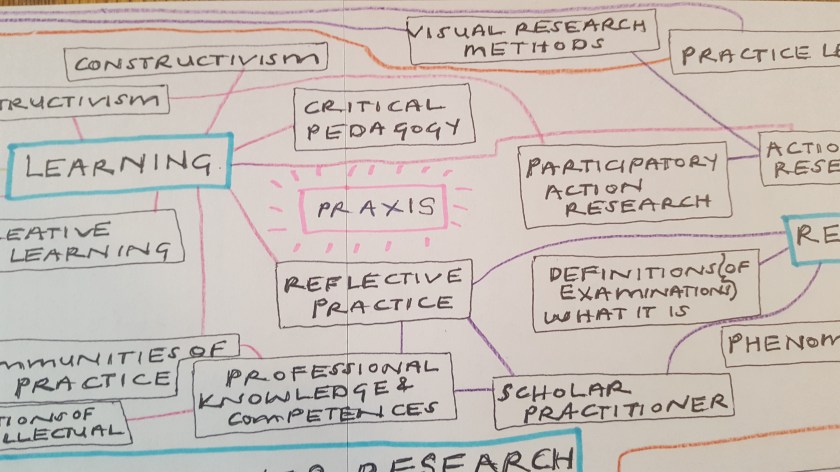
In an attempt to identify the literature I need to engage with for my research into practitioner research in the art museum I have been working on a mind-map.  My intention was to put down in a visual form the various relevant fields of activity/literature, with associated sub-fields and then identify any connections between these fields.  The plan was then to map onto this diagram the key texts associated with each field.  However, this second stage may need to be rethought as the first time I tried doing the original map I ran out of space on the paper.  The second version became so complex it was unreadable.  Below is a photograph of the third version.

20171012_100520

What strikes me first about this mind-map is the number of elements and its connectivity.  I have identified nine ‘fields’ – research, evaluation, museology, conservation, gallery education, curation, art history, art practice and learning that I think are essential to understanding how knowledge is generated and therefore how research is constructed in the art museum. Associated with these are a further 47 ‘sub-fields’, although it is very important to note that the descriptor ‘sub’ in no way means lesser.  Rather a sub-field constitutes a vital and relevant body of practice and/or theory that informs or may be an integral part of one or more of the ‘main’ fields.  The connecting lines are my attempt to show how the different fields link together and draw on one another. For example the sub-field ‘socially engaged art’ is here linked to art practice, gallery education, museology and curatorial practice as the ideas and practices that can be grouped under socially engaged practice have an important part to play in each of these fields. I have also highlighted three other domains – ethics, praxis and organisational change, which underpin the entire enterprise, shaping my approach to the literature and to my research focus.

20171012_100547

To state the obvious, these fields, domains and connections are ones that I have chosen, based on my existing knowledge and experience.  The map is partial in both senses of the word in that it is formed by my subjectivity and is incomplete. No doubt another researcher would draw up a different list and construct alternative connections, but it is a place to start and I will be adapting it as I go along.  I am anticipating that some fields will not prove to be as relevant as I imagine, whilst others not yet identified will surface as I continue my reading. I would also warmly welcome any ideas or suggestions for additions or amendments.

What the map also highlights for me is the cross-disciplinary nature of this research.  To understand how museum professionals undertake research for themselves and with and for others, and to construct a framework for practitioner research in the art museum (both of which are central to this project), I will need to look at literature from fields ranging from art history to participatory action research, from critical pedagogy to connoisseurship.  This is necessary as the art museum itself  is a multi-faceted space where different ideas collide, ‘a space for discursive thinking… a public place, publicly responsible for stimulating critical thinking in and through art’ as Grizelda Pollock and  Joyce Zemans describe in their book ‘Museums After Modernism: Strategies of Engagement’.

This cross-disciplinarity resonates also with my experience as an artist and a gallery educator. When operating in both of these professions my relationship to theory was eclectic. Rather than working within strict disciplinary boundaries I would draw ideas from various artists and fields to inspire and develop my practice according to what would be most useful and productive.  In this respect I was not unusual.  In an article I read recently, Henk Bergdorff, the Professor of Research in the Arts at the University of the Arts in The Hague, identifies that a ‘wide array of conceptual frameworks, theoretical perspectives and research strategies are employed’ in artistic research.  He lists art history, theatre and dance studies, architectural theory, semiotics, pragmatism and sociology as some of the conceptual frameworks, whilst research strategies include iconography, ethnomethodology and actor-network theory .  Similarly, one of the defining characteristics of gallery education is the absence of a discipline-spanning all encompassing theory.  Instead practitioners utilise and reference skills and knowledge from art history, pedagogy, philosophy, critical theory and art practice according to need, a professional trait that Helen Charman has written eloquently about here.

By adopting a boundary-free approach it would seem that I am allied to a broader trend towards cross or trans-disciplinary research that is being championed not only in the arts, but also in the social sciences, medicine and public policy. However I am mindful of the danger of cherry-picking literature from a variety of fields to fit my ideas. I was reminded by a colleague recently that selecting an idea from a discipline beyond one’s area of expertise runs the risk of divorcing it from its critical context and failing to locate it within the history and trajectory of the field.  It is vital, as Pat Thomson notes here when reading literatures to understand the key debates, trends and connections and locate any new research within its theoretical and practical context.  Pat provides some helpful suggestions to assist with this, including ‘scoping’, ‘mapping’ and ‘focusing in’, a process that I have begun with the mind-map.

20171012_100622

So my next step is to go back to the mind-map and start digging deeper into the literature associated with the fields and sub-fields, identifying the essential texts and key debates, strengthening or troubling the connections and finding out where my research fits in. This is an exciting but potentially overwhelming prospect and I will have to avoid the temptation to keep reading for ever and move systematically but fairly swiftly to the focusing in stage.  I see more mind-maps to come.


Welcome to PRAM

Welcome to a refreshed PRAM – the Practitioner Research in the Art Museum blog – that explores what it means to be a practitioner researcher in the art museum.  It looks at how research and practice operates in art museums today and by whom and explores how we might expand on current models to re-shape and broaden our understandings.  My background is in art practice, gallery education and research and I have a longstanding interest in widening access to art through supporting visitors and curators to engage in processes of shared enquiry.  I see value in framing the gallery as a space for research-led and reflective practice where museum professionals can operate as practitioner researchers, working with audiences and colleagues to co-produce new knowledge.

In this blog I worry away at questions relating to knowledge, creativity, expertise, rigour and authority and look at models of collaborative and practice based research being employed in art schools, universities and schools to see how these can be applied in the art museum.  I ground my ideas by learning at first hand from art institutions that are developing innovative cross-disciplinary and collaborative research-led practice, both in the UK and internationally. And I draw attention to writers and thinkers whose ideas are helpful and relevant in reconceptualising how research and practice operates in art museums currently.

This blog began life as part of an AHRC funded fellowship I undertook from September 2017 to July 2018 to research and develop a framework for practitioner-led co-produced research for the art museum of the twenty-first century.  This fellowship allowed me to step away from the role I had then as Head of Learning Practice and Research at Tate to read, research and write.  I visited museums and art organisations, interviewed and spoke with colleagues in the UK and internationally, facilitated seminars and talks and wrote this blog and a book – ‘Rethinking Research in the Art Museum‘ – that was published by Routledge in 2019.  The experience challenged and broadened my thinking about my own practice and art museum research in its entirety.

20180607_151742(1)
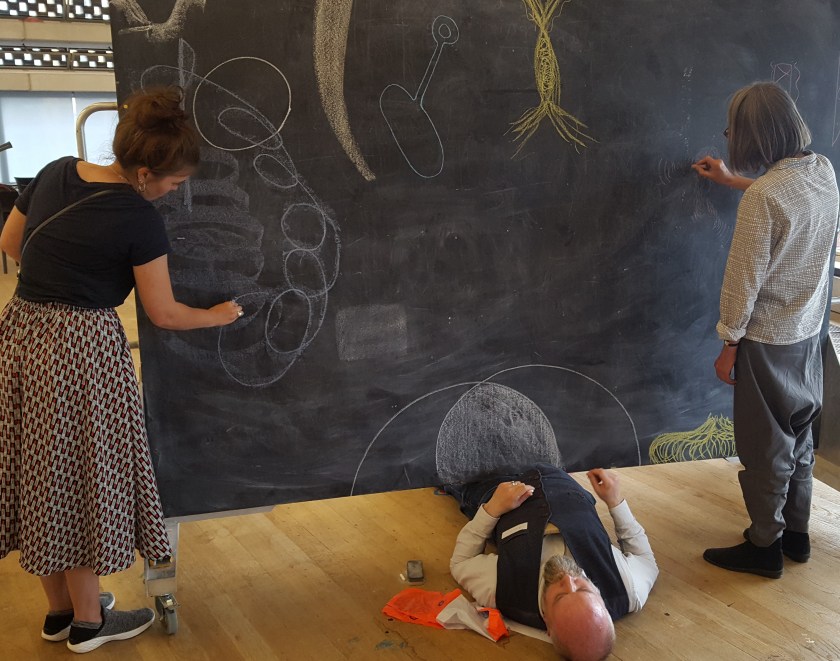
Participants at ‘The Physicality of Research’ seminar at Tate in June 2018

In August 2018 I returned to Tate and took up the role of Head of Research in February 2019. For the next year  I worked alongside others to write the Research Strategy, reframe our practice and develop research projects.  It was a rich and productive time.  Things changed profoundly when the Covid-19 pandemic hit in March 2020 and over the last two years, whilst continuing to support research and implement the strategy across the organisation, much of my time has been spent managing people and projects in challenging circumstances.  I have learnt a great deal and benefitted from working with extraordinarily dynamic and thoughtful people across different departments and disciplines in a creative and ambitious organisation. I have been privileged to connect with a wide range of brilliant colleagues from across the arts and academia who have expanded my thinking.  However I have missed writing and researching and in December 2022 I left Tate, to be able to focus my energy on these.  I plan to bring all of my experience and my ongoing explorations to my writing in this blog going forward.  And I hope to include the voices of fellow practitioner researchers as guest contributors.

As I wrote when I began the blog, the title ‘Practitioner Research in the Art Museum’ is a little too wordy for my liking.  However the acronym PRAM is very appealing. As well as the familiar definition of a carriage for young children, the Oxford English Dictionary also describes a pram as a ‘flat-bottomed boat for shipping cargo’.  I still think, even though it is a bit cheesy, that this blog functions as a means to transport ideas, as a place where ‘young’ and emerging thoughts can be communicated and carried forward.  As I enter the next new phase of my professional journey I look forward to sharing more of the cargo.