Democratising Culture and Cultural Democracy

I have written before on how certain ideas or even quotations can encapsulate a whole set of practices.  In my mind, democratising culture and cultural democracy are two of these essential concepts that offer a compelling theoretical rationale for gallery education and audience-focused museum practices more broadly. 

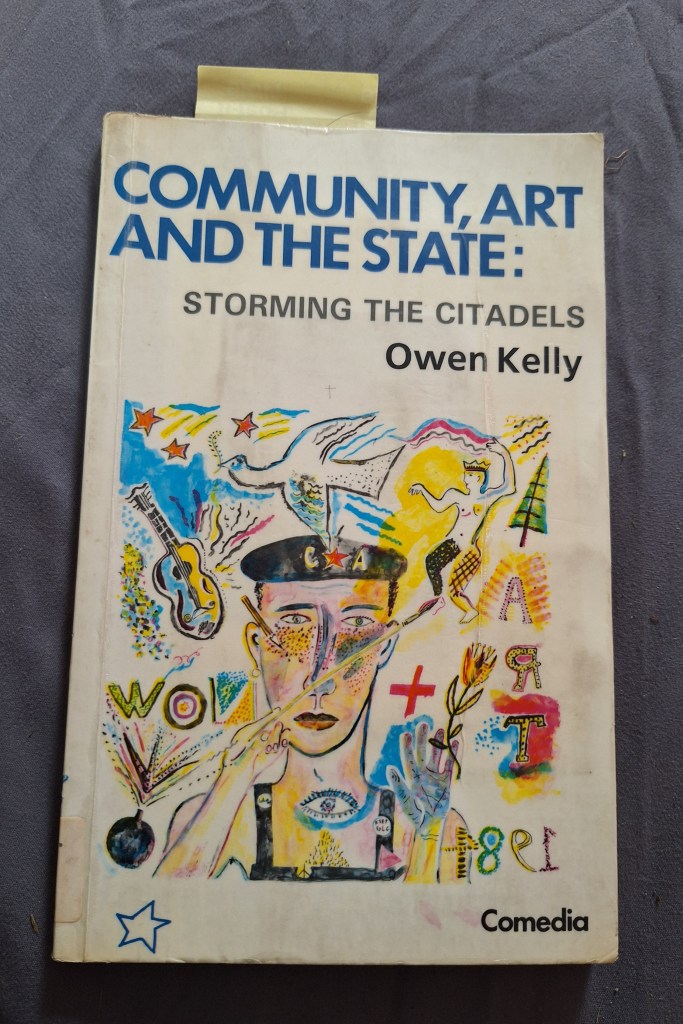
I first came across the concepts of democratising culture and cultural democracy in the late 1990s in Owen Kelly’s excellent polemical text on the development of community art in the UK that was first published in 1984.  In chapter 14 of the book Kelly takes issue with the argument that what can be understood as ‘high culture’ in the form of ballet, theatre, painting, sculpture, and opera needs to be democratised through education programmes and ‘intelligent popularisation’ so that those beyond the middle classes might be persuaded to watch and gain from them.  The spreading of an already determined cultural agenda is what can be understood as democratising culture.

Kelly does not dismiss democratising culture outright, but he questions why ‘there is a centrally controlled and co-ordinated set of cultural outputs at all,’ before going on to ask ‘who is it that selects the content of this set, and on whose authority [do] they do so.’  Kelly’s argument is that what is deemed to be high culture is never neutral, but rather serves the interests and reinforces the values of only a small group of society.  It follows therefore, that democratising this culture might not be as liberating and enriching as intended, but could instead be seen, in Kelly’s words, as ‘an oppressive imposition, a radical monopoly exerted by a certain way of seeing and organising experience.’ 

It is important to make clear at this point that according to Owen Kelly taking an already determined cultural agenda to ‘the masses’ is contentious, not because ‘the masses’ should not have access to the great works of Shakespeare, or the art of Matisse for example.  It is tricky because it positions the majority of people as passive consumers of forms of culture that have already been determined as good for them, rather than as potential creators of culture themselves. 
This is where the concept of ‘cultural democracy’ comes in.  Cultural democracy is premised on the understanding that culture is not something to be determined by a small group, but is instead created and circulated by everyone. It assumes that cultural production takes place within wider social contexts and feeds back into those contexts, helping to make sense of them.  It is the creation of culture itself and the meaning that comes from this that is empowering and beneficial, not the consumption of pre-determined cultural forms.  Hence, enacting cultural democracy involves giving people access to the means of making culture and cultural understanding as much as possible for themselves.

So how are these ideas relevant to gallery education and museum practice more widely?  In my experience democratising culture and cultural democracy operate simultaneously within art museums on a macro through to a micro level. In very basic terms, initiatives including free entry, scholarly art historical lectures and talks that start with ‘in this painting we can see the artist was doing x’ represent the spectrum of democratising culture in action.   At the same time, programmes that invite the public to take over spaces and create their own art within the museum, or events that bring in different cultural forms, such as house music or graffiti, or even workshops that begin with ‘what do you think the artist is trying to say here?’ align more closely with the idea of cultural democracy. 

In my view, we need museums to be providing activities that both democratise culture and support cultural democracy.  Crucially though, we need to be aware of the difference between the two and who might benefit more from each.  That is one reason why these two concepts are so valuable.
Ways into the art

In the first chapter of her wonderful memoir of, in her words, ‘art and life and sudden death’, the UK art critic Laura Cumming makes the following statement;

‘.. pictures can shore you up, remind you who you are and what you stand for. The relationship we have with them is so singular and unique that nobody can gainsay our experience. What you see is what you see, yours alone and always true to you, no matter what anyone else contends.’

Having looked up what ‘gainsay’ means (it means to deny or contradict), I have been mulling over this observation, which resonates in many ways with how I think about the experience of looking at art. We bring our own perspectives, informed by our life experiences, different knowledge and emotional state to any encounter with an art object. Hopefully, we gain understanding and make meaning though connecting with art, almost by being in conversation with it. If the encounter goes well, the artwork ‘speaks’ to us and we in turn communicate back to it, bringing our ideas and feelings to interpret what we see and sense more broadly. Through this dialogic process we enter into a relationship with the art that is, as Laura Cumming acknowledges, ours alone.

But what if the encounter does not go well? What if the art object remains silent and we cannot make any connection at all? Rather than entering into a dialogue we are confronted by an unfamiliar, and intimidatingly inaccessible object. In that moment we can feel uncomfortable and, as I have experienced so often, make the decision to turn away and move on. The opportunity to develop a relationship with the art object is lost, and with that all the potential richness and inspiration that comes with a positive encounter.

It comes as no surprise then that many of the principles on which gallery education practice is based are intended to support visitors to make that personal connection with art. The aim is often to give people ‘tools for looking’ and strategies for making meaning creatively. One of these approaches is the ‘Ways In’ approach that was originally conceived as ‘Ways of Looking’ at Tate Liverpool in the 1990s and for a while was implemented across all of Tate’s learning programmes. The approach, which is documented in the publication ‘The Art Gallery Handbook‘ is based on four frameworks – ‘A Personal approach’, ‘Ways into the object’, ‘Ways into the subject’ and ‘Ways into the context.’ Each framework is underpinned by a series of questions to help the viewer engage with the artwork, without dictating what their interpretation should be.

The ‘Personal approach’, for example, includes the questions ‘what are my first reactions and why might it make me feel this way?’ ‘Ways into the object’ invites the viewer to question, amongst other formal qualities of the work, why the artist might have used particular materials and processes. ‘Ways into the subject’ focuses on what the work is about – what questions is the work asking? And ‘Ways into the context’ invites the viewer to explore when and where the work was made and who was the artist, as well as taking into account the space the work is being shown in. These frameworks are not intended to be rigid, but rather are springboards for personal investigation. In some cases, the answers to the questions cannot be provided by the artwork alone and rely on the viewer having access to information that might be provided by an interpretation label or leaflet or online. This information however, is also not intended to determine what the viewers’ understanding of the artwork should be, but rather to help them to make, as the Handbook states, an ‘informed response’.

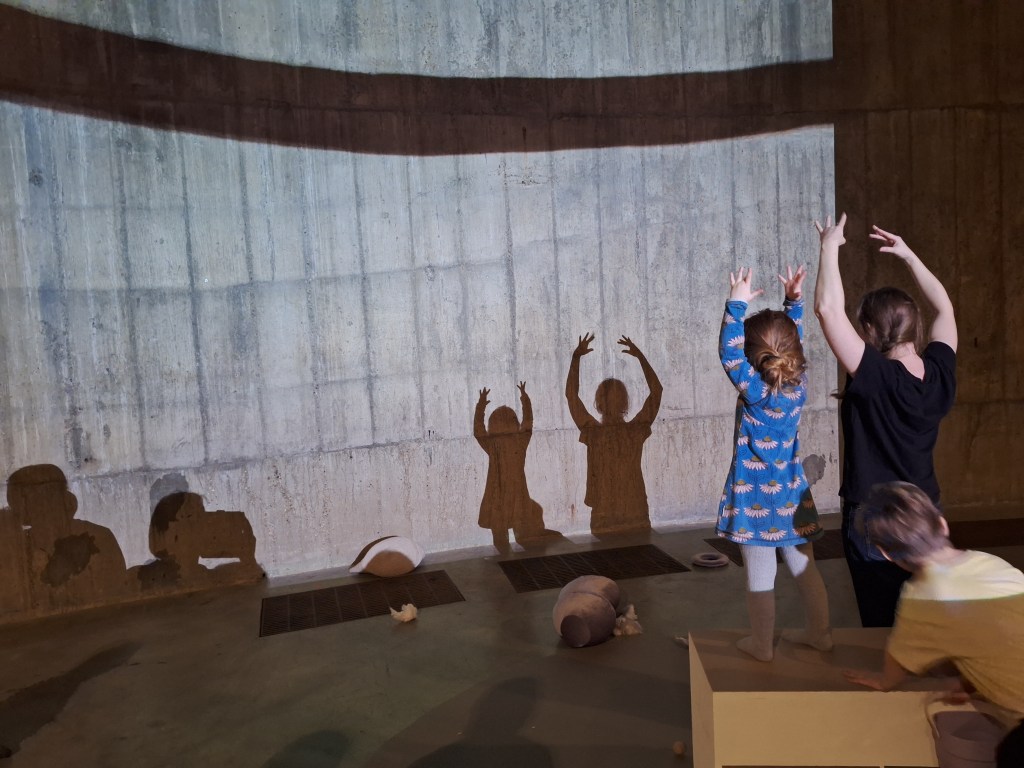
Visitors engaging with the ‘Joy of Feeling’ installation at Tate Modern, reminding me that not all engagement with art is visual and/or intellectual…

I have been thinking of the ‘Ways of Looking’ framework in relation to Laura Cumming’s statement. For, while I agree that ‘pictures can shore you up, remind you who you are and what you stand for,’ if we cannot find a means by which to connect with an art object, this fantastic affirmative process cannot happen. Galleries are complex places where entrenched hierarchies of knowledge and opaque rituals can be intimidating (for a helpful analysis of the impact of epistemological hierarchies I warmly recommend Deborah Riding’s paper which can be found here). And that is before you get to the art object itself. Having a few interpretive tools to draw on can help to build connections and get the dialogue with art started.