Communities of Practice

In the last nine months I have been fortunate to attend three seminars/conferences/gatherings of gallery and museum education professionals. In May 2025 I was part of the ‘Participation as Practice’ event at the Munch Museum in Oslo, where we focused on what it means to curate participation with artists for audiences with the art museum. In early November 2025 I attended the engage (the UK National Association for Gallery Education) Gathering in Bradford, where the focus was on reflecting back on visual arts engagement and gallery education from the past 50 years, to imagine practice going forwards. The last week of November found me in Berlin at the 4th International Conference of the Leibniz Centre of Excellence for Museum Education exploring the theme of ‘Diversity and Discourse: Engaging Museum Visitors in the 21st Century’ with colleagues drawn predominantly from science and natural history museums.

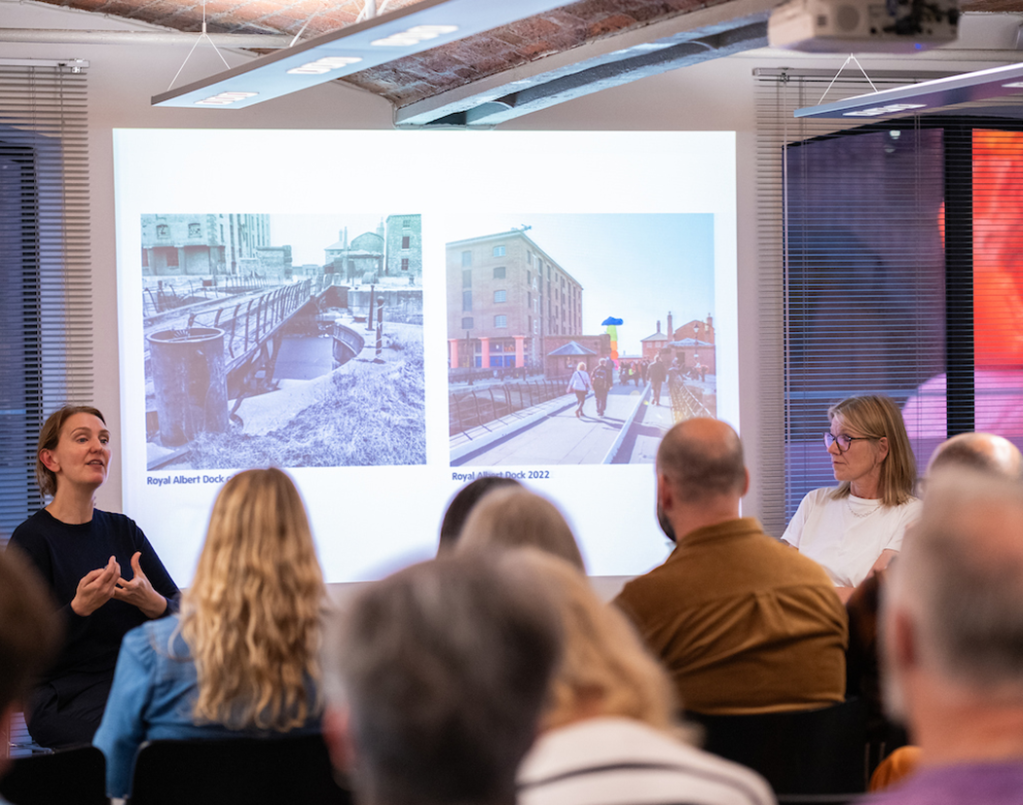
Molly Molloy from Tate Modern and Tove Sørvåg from Munch Museum presenting at the ‘Participation as Practice’ seminar

Each of these events were rich and rewarding, providing opportunities to hear from colleagues from the UK, Europe and further afield. Each offered insights into the variety of practice across museum and gallery education (historically, geographically, and in relation to different collections), and demonstrated the rigour of the research being conducted on and around these practices. Informal conversations during the events were, as ever, enlightening. I came away from each event with a clearer picture of the challenges the sector is facing, alongside the optimism and pragmatic choices colleagues are applying to make the sector fit for the complexities of the world today. The presentations and discussions reminded me why so much museum and gallery education work is highly theorised, but is also learnt through the doing of practice.

All three of these events demonstrated why it is vital for museum and gallery education professionals to gather together. Etienne Wenger and Jean Lave’s well-known theory of ‘Communities of Practice’ (CoP) is helpful here in rationalising why such regular group interaction is so valuable. A CoP can be described as a group of people who have a deep interest in something they do and, crucially, learn how to do it better through regular interaction with others. CoPs have three distinct characteristics; they share a common pool, or ‘domain’ of knowledge and understanding, which supports shared learning and participation; they are based in community, which allows for collaboration; finally their focus is on practice – on the doing – and how we can learn from this. These characteristics were very present at all three of the events I attended.

For example, despite having different focuses, themes came up in discussions at each event that reflected a shared domain of knowledge in terms of what constitutes best practice. The importance of time, for instance, and the need for trust in and from visitors. The value of experimentation and of authentic collaboration with audiences also surfaced, as did the unpicking of hierarchies of knowledge to allow for new and plural ways of knowing. Participants at each event brought their informed perspectives on these themes to the presentations and discussions. Dialogue within the community stimulated further debate and fresh insights for those present.

It was noticeable too, how many of the presentations at all three events were based around case studies of practice. Colleagues shared examples of projects they had been working on, in some cases to illuminate a theory in action, or to demonstrate how a problem or issue was being tackled through a specific intervention. We were shown not only the aims and outcomes of projects, but essentially we also got to see, hear and discuss processes and the evolution of practices, in some instances over many years.
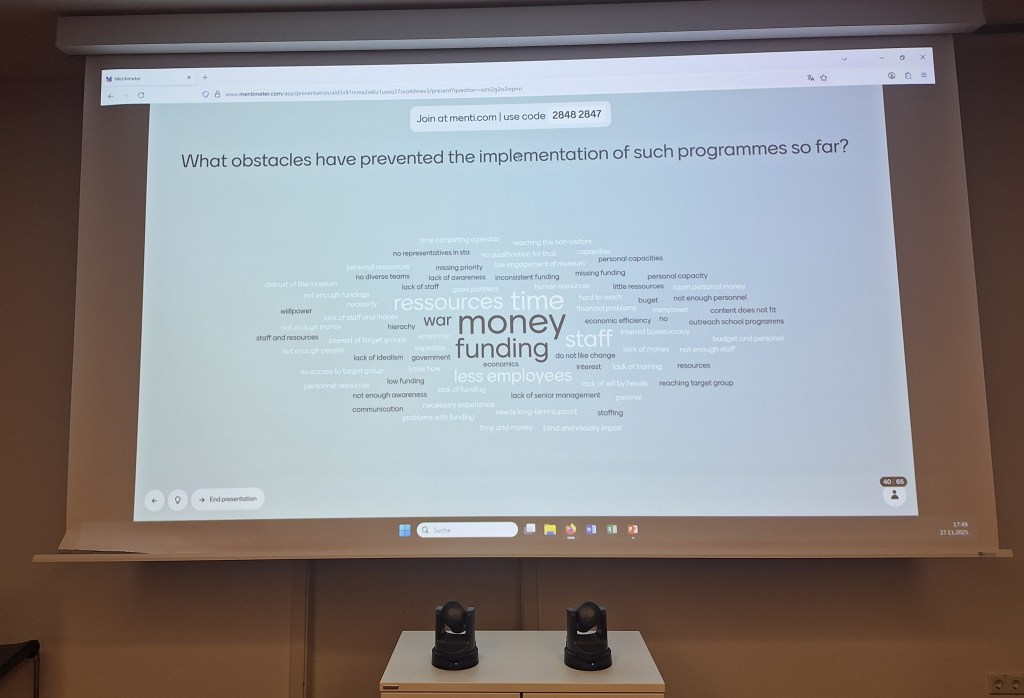
Results from a group exercise at the Leibniz conference in response to the question ‘what obstacles have prevented the implementation of programmes to increase audience diversity?’

It goes without saying that gallery and museum education is an incredibly diverse field. I met colleagues from small regional art galleries and huge national museums, from relatively well-funded research museums through to art galleries whose budgets have been brutally cut in recent years. Each colleague was dealing with their own histories, audiences, institutional priorities and wider policy directives. Yet the community of practice was clear to me, as was the enormous value to the members of this CoP of coming together to share and learn. It is, perhaps, because the field is so broad, that we need as many chances to share practice in person as possible.

Art or… and Education

Two texts have got me thinking recently. The first is a text by the art historian Griselda Pollock first published in 1985/6 and recently republished in a small book produced by Sternberg Press. The second is the chapter ‘Pedagogic Projects: ‘How do you bring a classroom to life as if it were a work of art’ in Claire Bishop’s book ‘Artificial Hells: Participatory Art and the Politics of Spectatorship’, which was published in 2012. Both essays have helped in my ongoing exploration of how we can understand and value artists’ ‘education’ work in museums.

Griselda Pollock’s text, the original version of which was a lecture given at the Royal College of Art, is a critique of art and art school pedagogy and practice from a feminist perspective. At the heart of her critique is a deconstruction of the ‘unquestioned notions of individualism’ in art history and society that celebrate ‘the idea of the self-motivating and self-creating artist who makes things that embody that peculiarly heightened and highly valued subjectivity…. a Romantic idea of the artist as the subjectivity whose works express both a personal subjectivity and a universal condition.’

Drawing on theorists including Karl Marx, Fredric Jameson, Raymond Williams, and Roland Barthes, Pollock argues instead that art is produced and received communally. Art’s ‘community’ includes all those practical activities that are necessary to make an artwork such as weaving canvas, manufacturing technology, or quarrying stones. It also includes the ‘conversational community’ who provide the wider conceptual context – the ‘commonality of terms, ambitions and criteria of assessment’ – that allow an art work to be understandable.

From this, Pollock argues that discerning the meaning of art is not about interrogating the individual artist’s biography and intentions, but instead requires the viewer, as a participant in this ‘social practice’, to create meaning from an awareness of their own positionality and the social and cultural conditions of the art work’s creation. In other words, we need to understand art itself as a collective enterprise – made by many and only meaningful within social and historical contexts of creation and reception. It is this ontological framing of art as a shared activity rather than as a singular creative enterprise which resonates for me.

Claire Bishop’s text addresses similar themes to those explored by Griselda Pollock, while focusing specifically on artistic practice that ‘claims to be pedagogic’. She begins the chapter by posing the interesting contradiction that ‘art is given to be seen by others, while education has no image’ before suggesting that participatory art ‘forecloses the traditional idea of spectatorship and suggests and new understanding of art without audiences, one in which everyone is a producer’. It would appear that Bishop too is advocating for a collective understand of art where the boundaries between artist and audience are reformed.

However, the chapter reveals that Bishop is uncomfortable with this position. She details various artists’ projects whose relational and/or educational practice involves direct participation by members of the public. Yet she admits that she often struggles with these projects’ visual and conceptual ‘rewards’. Notably she finds it difficult to reconcile the value for those participating directly, with the value given to those who are spectators. I share Bishop’s reservations about some of the artistic/education practices that were fashionable at the time she wrote the book and her exploration of artists who grapple with the participation/spectatorship dilemma in different ways is illuminating.

But what is actually most useful for me in Bishop’s text is her acknowledgment that we need to find different ways of judging and valuing art practices that involve both art and education. In her closing sentence to the chapter she makes the rallying cry that ‘we learn to think both fields together and devise adequate new languages and criteria for communicating these transversal practices.’ I could not agree more.

We need to move beyond judging artist led education practices, especially those commissioned by education/learning curators in museums, according to the individualistic criteria so effectively critiqued by Griselda Pollock. If we fail in this, we will continue to misunderstand and misrepresent a practice that is both art and education and also potentially something else that requires new language and ways of thinking.

Democratising Culture and Cultural Democracy

I have written before on how certain ideas or even quotations can encapsulate a whole set of practices.  In my mind, democratising culture and cultural democracy are two of these essential concepts that offer a compelling theoretical rationale for gallery education and audience-focused museum practices more broadly. 

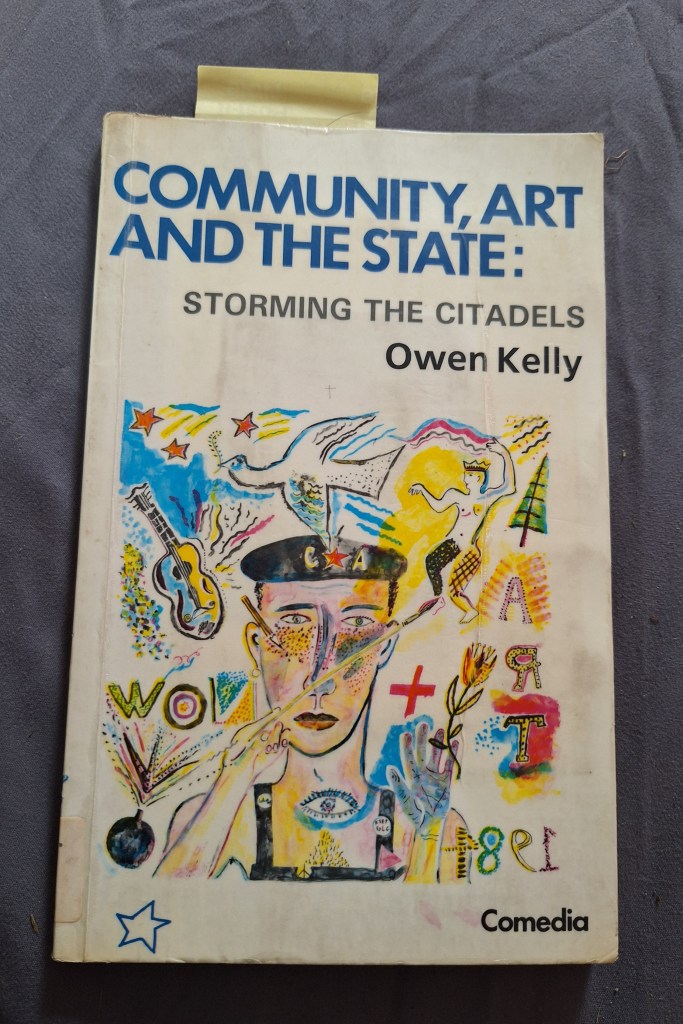
I first came across the concepts of democratising culture and cultural democracy in the late 1990s in Owen Kelly’s excellent polemical text on the development of community art in the UK that was first published in 1984.  In chapter 14 of the book Kelly takes issue with the argument that what can be understood as ‘high culture’ in the form of ballet, theatre, painting, sculpture, and opera needs to be democratised through education programmes and ‘intelligent popularisation’ so that those beyond the middle classes might be persuaded to watch and gain from them.  The spreading of an already determined cultural agenda is what can be understood as democratising culture.

Kelly does not dismiss democratising culture outright, but he questions why ‘there is a centrally controlled and co-ordinated set of cultural outputs at all,’ before going on to ask ‘who is it that selects the content of this set, and on whose authority [do] they do so.’  Kelly’s argument is that what is deemed to be high culture is never neutral, but rather serves the interests and reinforces the values of only a small group of society.  It follows therefore, that democratising this culture might not be as liberating and enriching as intended, but could instead be seen, in Kelly’s words, as ‘an oppressive imposition, a radical monopoly exerted by a certain way of seeing and organising experience.’ 

It is important to make clear at this point that according to Owen Kelly taking an already determined cultural agenda to ‘the masses’ is contentious, not because ‘the masses’ should not have access to the great works of Shakespeare, or the art of Matisse for example.  It is tricky because it positions the majority of people as passive consumers of forms of culture that have already been determined as good for them, rather than as potential creators of culture themselves. 

This is where the concept of ‘cultural democracy’ comes in.  Cultural democracy is premised on the understanding that culture is not something to be determined by a small group, but is instead created and circulated by everyone. It assumes that cultural production takes place within wider social contexts and feeds back into those contexts, helping to make sense of them.  It is the creation of culture itself and the meaning that comes from this that is empowering and beneficial, not the consumption of pre-determined cultural forms.  Hence, enacting cultural democracy involves giving people access to the means of making culture and cultural understanding as much as possible for themselves.

So how are these ideas relevant to gallery education and museum practice more widely?  In my experience democratising culture and cultural democracy operate simultaneously within art museums on a macro through to a micro level. In very basic terms, initiatives including free entry, scholarly art historical lectures and talks that start with ‘in this painting we can see the artist was doing x’ represent the spectrum of democratising culture in action.   At the same time, programmes that invite the public to take over spaces and create their own art within the museum, or events that bring in different cultural forms, such as house music or graffiti, or even workshops that begin with ‘what do you think the artist is trying to say here?’ align more closely with the idea of cultural democracy. 

In my view, we need museums to be providing activities that both democratise culture and support cultural democracy.  Crucially though, we need to be aware of the difference between the two and who might benefit more from each.  That is one reason why these two concepts are so valuable.

Ways into the art

In the first chapter of her wonderful memoir of, in her words, ‘art and life and sudden death’, the UK art critic Laura Cumming makes the following statement;

‘.. pictures can shore you up, remind you who you are and what you stand for. The relationship we have with them is so singular and unique that nobody can gainsay our experience. What you see is what you see, yours alone and always true to you, no matter what anyone else contends.’

Having looked up what ‘gainsay’ means (it means to deny or contradict), I have been mulling over this observation, which resonates in many ways with how I think about the experience of looking at art. We bring our own perspectives, informed by our life experiences, different knowledge and emotional state to any encounter with an art object. Hopefully, we gain understanding and make meaning though connecting with art, almost by being in conversation with it. If the encounter goes well, the artwork ‘speaks’ to us and we in turn communicate back to it, bringing our ideas and feelings to interpret what we see and sense more broadly. Through this dialogic process we enter into a relationship with the art that is, as Laura Cumming acknowledges, ours alone.

But what if the encounter does not go well? What if the art object remains silent and we cannot make any connection at all? Rather than entering into a dialogue we are confronted by an unfamiliar, and intimidatingly inaccessible object. In that moment we can feel uncomfortable and, as I have experienced so often, make the decision to turn away and move on. The opportunity to develop a relationship with the art object is lost, and with that all the potential richness and inspiration that comes with a positive encounter.

It comes as no surprise then that many of the principles on which gallery education practice is based are intended to support visitors to make that personal connection with art. The aim is often to give people ‘tools for looking’ and strategies for making meaning creatively. One of these approaches is the ‘Ways In’ approach that was originally conceived as ‘Ways of Looking’ at Tate Liverpool in the 1990s and for a while was implemented across all of Tate’s learning programmes. The approach, which is documented in the publication ‘The Art Gallery Handbook‘ is based on four frameworks – ‘A Personal approach’, ‘Ways into the object’, ‘Ways into the subject’ and ‘Ways into the context.’ Each framework is underpinned by a series of questions to help the viewer engage with the artwork, without dictating what their interpretation should be.

The ‘Personal approach’, for example, includes the questions ‘what are my first reactions and why might it make me feel this way?’ ‘Ways into the object’ invites the viewer to question, amongst other formal qualities of the work, why the artist might have used particular materials and processes. ‘Ways into the subject’ focuses on what the work is about – what questions is the work asking? And ‘Ways into the context’ invites the viewer to explore when and where the work was made and who was the artist, as well as taking into account the space the work is being shown in. These frameworks are not intended to be rigid, but rather are springboards for personal investigation. In some cases, the answers to the questions cannot be provided by the artwork alone and rely on the viewer having access to information that might be provided by an interpretation label or leaflet or online. This information however, is also not intended to determine what the viewers’ understanding of the artwork should be, but rather to help them to make, as the Handbook states, an ‘informed response’.

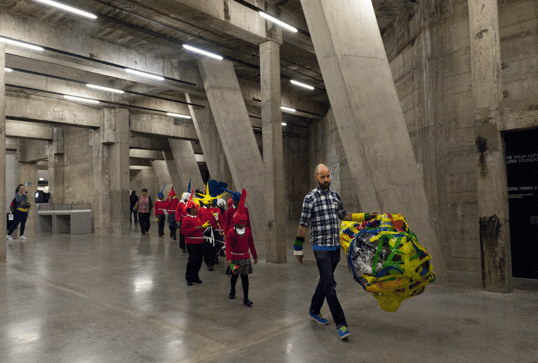
Visitors engaging with the ‘Joy of Feeling’ installation at Tate Modern, reminding me that not all engagement with art is visual and/or intellectual…

I have been thinking of the ‘Ways of Looking’ framework in relation to Laura Cumming’s statement. For, while I agree that ‘pictures can shore you up, remind you who you are and what you stand for,’ if we cannot find a means by which to connect with an art object, this fantastic affirmative process cannot happen. Galleries are complex places where entrenched hierarchies of knowledge and opaque rituals can be intimidating (for a helpful analysis of the impact of epistemological hierarchies I warmly recommend Deborah Riding’s paper which can be found here). And that is before you get to the art object itself. Having a few interpretive tools to draw on can help to build connections and get the dialogue with art started.

Learning through Doing

Museum professionals are quite rightly preoccupied with how best to support visitors to enjoy themselves and learn in the museum. In my experience, however, these same professionals spend less time examining how they (and therefore their institutions) might learn and grow. The pressures of busy programming schedules, at times combined with entrenched working patterns and inflexible hierarchies can inhibit staff from questioning their practice in positive and productive ways. Yet my own and others’ research has demonstrated that cultural organisations benefit enormously from prioritising research into, analysis of and reflection on their culture and activities. These ‘learning’ organisations are characteristically nimble, creative and reflexive spaces, able to test out ideas, face challenges and respond to the needs and wishes of their collaborators and visitors.

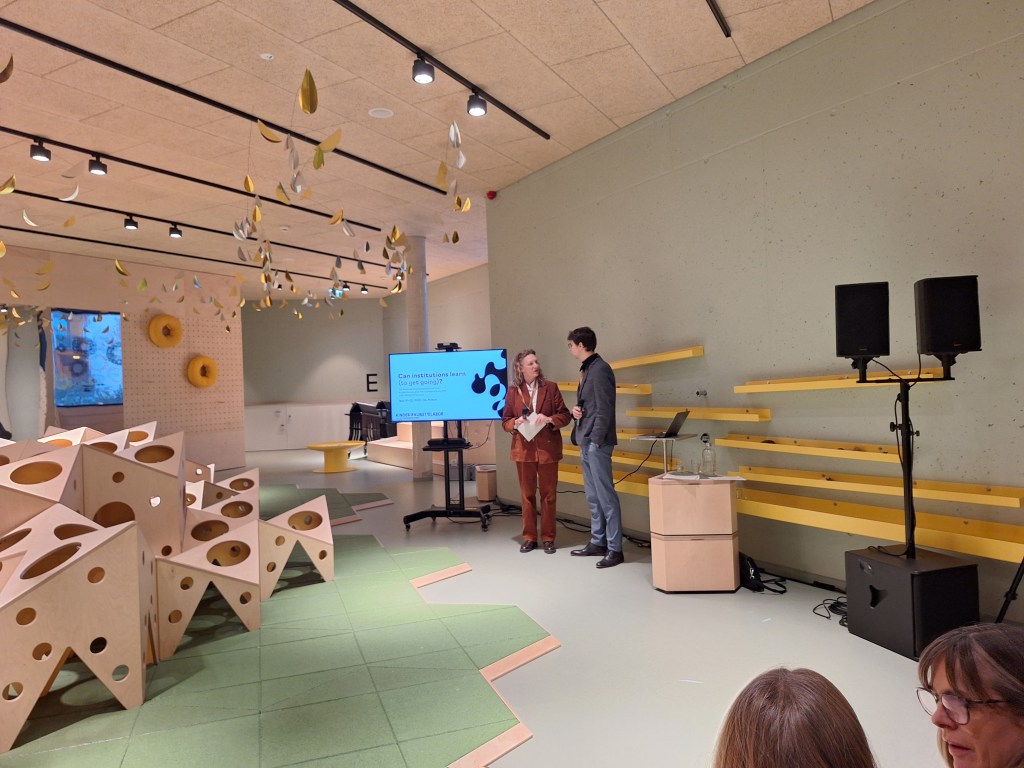
With these thoughts in mind, I was delighted to participate in the two-day symposium ‘Can institutions learn (to get going?)’ in Austria in November. The symposium was convened by Dr Mona Jas, the Artistic Director of KinderKunstLabor and Dr Aron Weigl, Executive Director of EDUCULT and was held at KinderKunstLabor, the newly opened contemporary art museum that thinks with and for children situated in St. Pölten. As the title suggests, the symposium examined the strategies and practices that different organisations and individuals employ to understand what they are doing and how they might do it better. We heard presentations from curators, policy makers, academics and researchers, had a tour of the museum itself and the current exhibition ‘dream.lab’ by Brazilian artist Rivane Neuenschwander and participated in artist-led workshops. We also ate together and had time for rich conversations between the presentations. It was a very rich and informative experience which gave me much food for thought. In particular, the following themes seemed to recur in a number of the talks and conversations.

What came across strongly is that people and hence institutions learn through doing.  It is through experiencing the reality of programmes and activities (and especially if these do not go according to plan) that we learn how to work with others in the museum. Alice Walton and Leanne Turvey, the Senior Curators for the Schools and Teachers Programme at Tate, for example, spoke compellingly about how ‘points of difficulty’ in their programming prompted new and better-informed ways of working with young people with special needs. Their practice, as with other speakers’ work, is highly theorised and deeply considered, but it is through witnessing the programmes in action that these practitioners understand what actually happens. Theory alone is never enough.

However, this experiential learning can only happen if we are prepared to listen, question our own opinions and move out of our comfort zones.  We learn by accepting change and allowing our ideas to be informed by the ideas of others. Collaborative experimentation, combined with ongoing shared reflection is essential if institutions and the people within them are to grow and learn. The presentation by Muhammet Ali Bas on his experience as a curator and educator of city projects for the Tangente St. Pölten Festival highlighted this point. He described the importance of listening to oneself and to collaborators both to develop genuinely co-created events, but also to ‘unlearn’ old and unhelpful patterns of working.

Mona Jas and Aron Weigl speaking on day one of the symposium

The language and methods that museum practitioners use is very significant in terms of including and excluding people.  Anahita Neghabat was researcher in residence at KinderKunstLabor from August 2023 to February 2024. Her talk showcased the research she undertook during that time, which evidenced that institutions must embrace plurality and non-linear exploration to avoid reinforcing exclusionary practices. This pluralism applies equally to artistic, research and mediation processes, so that diverse perspectives can be accommodated equally. Learning to use multiple languages (visual and linguistic) is helpful, not only in relation to communication, but also in shaping the institution more broadly.

Allowing children to engage directly with materials, art and artists is a powerful way of giving them agency to create and, as Anahita said, ‘dream themselves into different spaces.’ But power relations always exist in museums and institutions must pay close attention to who is present in the museum space and who has the power to speak and act. In a conversation that Anahita and I had after she spoke we talked about trust and why this is so important. Children must trust that the institution will welcome them and their ideas and the institution must have trust in children and allow them autonomy and agency. If this trust does not exist, the children and the museum will struggle to learn.

This is only a fraction of the ideas that were exchanged during the symposium. Reflecting on it now, I am conscious of the fact that the event itself manifested many of the ways that an institution can learn ‘to get going’, as the title provoked. We were invited to talk, listen, collaborate, share and question our ideas, reflect and change. We were welcomed into the space and trusted to contribute our views and to create our own objects during the workshops. I learnt a great deal.

A publication has also been produced to accompany the symposium, with texts in German and English.

Places to play in the art museum

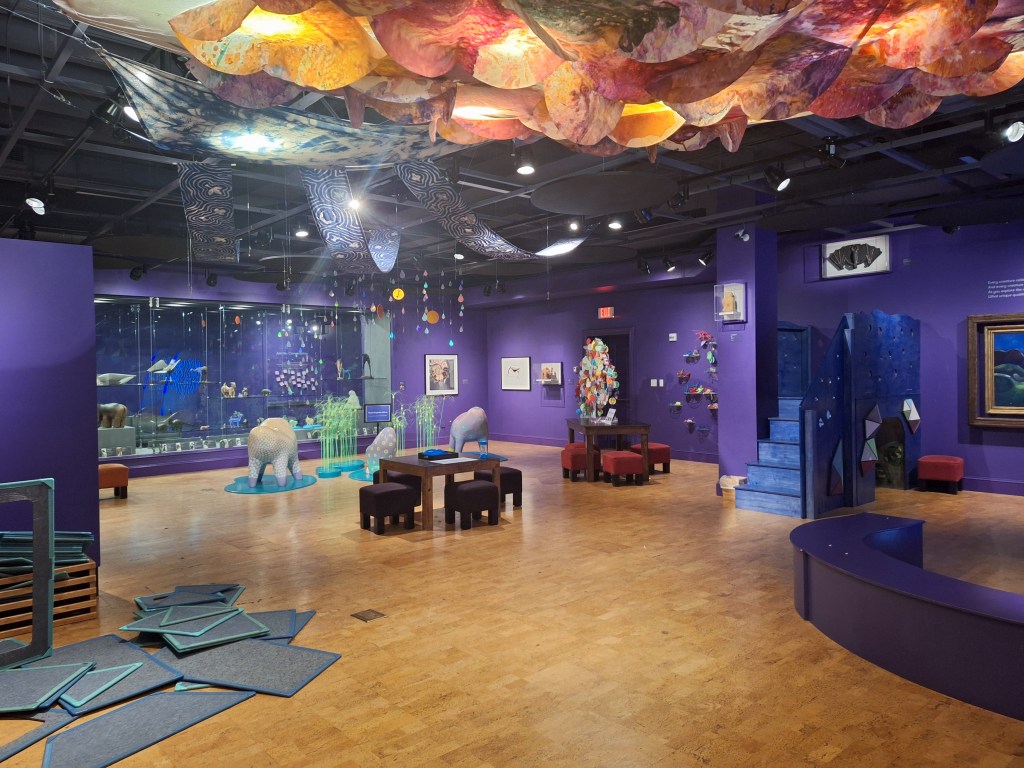
In September I was fortunate to be invited to Columbus, Ohio by Dr Dana Kletchka, Associate Professor of Art Museum Education at Ohio State University. During my short visit I met with Dana, her wonderful students and colleagues from the Wexner Center for the Arts. I was also taken on a tour of the Columbus Museum of Art (CMOA) by Hannah Mason-Macklin, the Director of Interpretation and Engagement at the Museum. There is much I could talk about from this inspiring visit, but in this post I want to focus on the suite of spaces at CMOA designated as the JPMorgan Chase Center for Creativity, in the middle of which is ‘The Wonder Room‘.

On the CMOA website The Wonder Room is described as ‘as a place for intergenerational exploration, play, connection, and discovery. Art is displayed in unexpected ways, and custom, hands-on activities are featured prominently near great works of art to inspire creativity in this family-friendly space.’ In reality the space is brightly coloured, with objects to handle, climb on and creatively respond to. The invitation made explicit in the space is for visitors to experiment and connect with art and artists through play, and as the website says ‘to exercise their courageous imagination’.

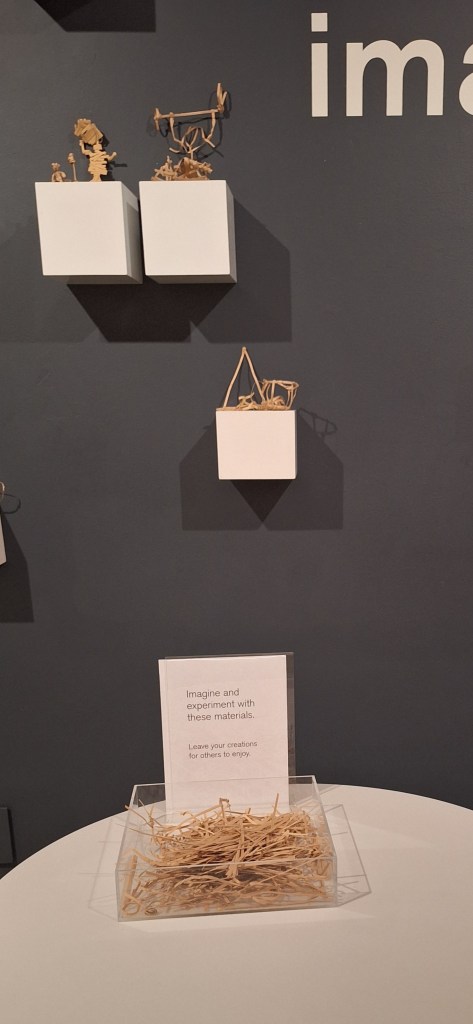
In the spaces circulating around The Wonder Room are further interventions that connect with the art in the museum through hands-on making activities. And although I was visiting the museum on a day when it was closed, I could easily imagine how engaging these spaces would be for visitors of all ages. The questions posed on the walls were open-ended and stimulating and the materials given for visitors to create with were simple, yet adaptable enough to allow for thoughtful creative responses.

Visiting CMOA reminded me how vital it is for art museums to provide opportunities for play and not only for children. Play, as writer and museum educator Claire Bown talks about in her ‘Thinking Museum‘ podcast is when we immerse ourselves in something for enjoyment’s sake. It is when we allow our imagination to range freely and when exploration and enquiry can bring joy and pleasure. Play empowers us and improves our social and emotional skills, whatever our age and playing with others brings us closer, allowing for human connection.

Increasingly art museums are providing spaces where play is actively encouraged. These spaces are generally curated by members of a Learning or Education department and frequently involve collaborations with artists. The brilliant ‘Come Think with Us’ initiative at the Munch Museum in Oslo is an example of Learning colleagues and artists working to create an immersive environment for intergenerational engagement and play. The most recent iteration of this being ‘Sofie’s Room‘, a collaboration with artists Roza Moshtaghi and Ronak Moshtaghi. Likewise the Uniqlo Tate Play interventions in the Turbine Hall at Tate Modern are collaborations that actively invite the playful participation of visitors of all ages. In the summer of 2024, for example, the artist Oscar Murillo worked with Learning and exhibition curators to create ‘The Flooded Garden‘, an installation where visitors were invited to work together to create a huge canvas inspired by the work of Claude Monet.

Creating these playful spaces in the museum achieves many positive outcomes for visitors and institutions. Primarily they act as a draw for families, but in my experience adult visitors can also relish opportunities to make things and have fun in the museum. These spaces also allow for a different mode of collaboration with artists, which requires expertise and sensitivity on the part of curators. It takes considerable skill to create genuinely engaging interventions that encourage productive structured play. Too many directions and playfulness is no longer possible; too little structure and visitors may not know how to connect, or not have the confidence to experiment. I know from talking with colleagues working on these programmes how much work goes into creating these generous and generative spaces. It is a serious business designing for play.

The importance of welcome and care

These days I am more likely to visit a museum or gallery for my own personal pleasure and curiosity, rather than in a professional capacity. I go to see an exhibition that interests me, to meet friends and to see works in collections that I especially like. Perhaps for this reason I have become acutely aware of the overall visitor experience I have when I visit. I am more conscious of the costs of entry, or of buying a drink in the café, for instance. I notice how easy or not it is for me to get around and what information is made available to help me with this.

In particular I have started to register the extent to which I am made to feel welcome, both when I arrive at a museum and during my visit. In my mind, the welcome we receive is a fundamental and revealing manifestation of the values of any institution. As with any act of hospitality, a warm welcome is grounded in generosity, consideration and trust in those that are being invited into the space. It takes care to make people feel welcome. And, as Maria Puig de la Bellacasa writes in her book ‘Matters of Care‘, care is ‘a concrete work of maintenance, with ethical and affective implications’. In other words, care requires some affective involvement – I care for, I worry – but must be accompanied by the necessary labour, ‘the sometimes tedious maintenance of a relation’ through ‘putting in the work’ as de la Bellacasa notes.

A welcoming institution genuinely wants all those who visit to occupy their spaces, to relax and enjoy themselves and feel at home there. They pay attention to what will support their visitors to be inspired, challenged and comforted, should they need or wish to be. These institutions put in the work to try and make that happen.

There are multiple ways that we are made to feel welcome or not in the museum. One of which that has caught my attention is through the messages the museum chooses to communicate when you arrive. Below are two entirely unscientific observations based on my experiences over the last twelve months.

When I visited the MIT Museum in Cambridge, Massachusetts last Autumn. I was immediately struck by the message that greeted me by the entrance. It reads as follows:

Here is an explicit invitation for me and everyone else to come in and to join in. It locates the museum as a meeting place where we are encouraged to share our ideas and views. It communicates the museum’s appreciation that we have made the effort to visit. I, in turn, entered the museum feeling that, even though my knowledge of science and technology is minimal, I was welcome to be there.

A contrasting but equally significant message greeted me when I visited the Fitzwilliam Museum in Cambridge, UK in December 2023. It said:

Although not an explicit message of welcome, to me this sign also demonstrates care on the part of the institution. As has been highlighted particularly in recent years, museums are not neutral and their historic lack of transparency regarding their histories and exclusionary institutional cultures has contributed to many feeling profoundly unwelcome. As far back as 2001 the British museologist Eilean Hooper-Greenhill was arguing that museums need to acknowledge visibly the conflicts and contradictions implicit in the presentation and interpretation of culture. To become what she calls an inclusive ‘post-museum’ institutions need to recognise their responsibilities in addressing all aspects of their histories. This sign indicated to me a willingness on the part of the Fitzwilliam to attempt to do this.

I am, however, well-aware that it is relatively easy to install a sign and to state a desire on the part of the museum to invite everyone in and to be more open about their origins. I am also conscious that as a museum professional it will probably not take too much to make me feel at home in these spaces. Taking the necessary care and putting in the work so that those who might feel less confident in the gallery is what really counts.

Looking back on the origins of Gallery Education

In recent weeks I have had reason to connect back to the early days of gallery education and to some of the inspiring (almost exclusively) women who were key to its development. Firstly I have been collating tributes and writing my own celebratory obituary to Sue Clive, OBE. Sue was an inspirational figure who was instrumental in developing gallery education programmes at a number of galleries including Cornerhouse in Manchester and the Arnolfini in Bristol in the 1980s and 1990s. Jenni Lomax, OBE is an equally important and influential figure, who developed and headed up the Community Education and Public Programmes department at the Whitechapel Art Gallery in London from 1979 to 1989, before going on to be the Director of the Camden Arts Centre. I had the pleasure of hearing Jenni in conversation with artist Mohammed Adel and Dr Richard Martin, the current Director of Education and Public Programmes at the Whitechapel last week.

What has become apparent to me through these connections is how much the values, methods, aims and desired outcomes of the field of gallery education were shaped by the work of these and other pioneering practitioners working at that time. Reading the tributes to Sue written by colleagues who collaborated with her and hearing Jenni talk about her Whitechapel programmes, I have been struck by the significance of the following themes. In my mind, these are still fundamental to gallery education practice today.

The centrality of artists and artists practice

Both Sue and Jenni worked closely with artists as educators in the gallery and beyond. They recognised that artists brought an approach to teaching and learning that was informed by their own artistic practices. These artists foregrounded processes of thinking and learning through making that sought to bring learners closer to the art on show. Feeling comfortable with open-ended exploration, the artists allowed learners to engage creatively and collaboratively with the art and each other.

Situating the gallery as a place of exchange

For Sue and Jenni, the gallery was a meeting point. It was not only a place where visitors came into contact with art, but was also the space where the visitor could share their knowledge and creativity with gallery staff and with others. Hence, the pedagogic methods they adopted were fundamentally collaborative. The emphasis was on co-construction and shared learning, through dialogue. On a programmatic level too the priority was to take the art out into the local community as well as invite that community to come to the gallery. Artist-led outreach programmes were as important as in-gallery workshops.

Celebrating experimentation and cross-disciplinary ways of working

The language of ‘innovation’, ‘fluidity’ and ‘boundary-crossing’ cropped up regularly in the tributes to Sue and in Jenni’s talk. Both practitioners advocated for cross-disciplinarity and worked, not only with visual artists, but also with performance practitioners and musicians. In the 1980s gallery education was an emerging field, not bound by disciplinary conventions. This allowed for considerable experimentation and creative risk-taking; both making and ‘unravelling’ established ways of thinking, as Richard Martin observed when talking to Jenni.

Recognising the importance of praxis

My own memory of Sue is of an extremely generous and thoughtful colleague who was fully committed to establishing gallery education as a legitimate and valuable field of creative teaching and learning. She knew, as others did at that time, that for this to happen, gallery education needed to have a strong theoretical underpinning and recognisable good practice. For all the focus on experimentation and permeability, the practice that Jenni, Sue and others developed was extremely rigorous and care-full. Their methods were informed by concepts drawn from critical pedagogy, feminism, anti-racism and cultural theory. They were aspiring to bring about change – in learners, in the gallery, and in the wider community. Gallery education for them was never about colouring in worksheets, or transmitting the pre-determined expertise of gallery professionals and art historians. It was, and hopefully remains, a much more radical undertaking, providing an intellectual, emotional and creative space for questioning, re-thinking and re-making. 

I was delighted to hear that Jenni is writing a book about the education programme at the Whitechapel. Gallery education’s history is woefully under-documented and the brilliant work that colleagues undertook from the mid-70s onwards is very patchily recorded. This is perhaps because gallery education by definition emphasises innovation and engagement with the present. However, I also believe that it is salutary and important to engage with the history of the practice and acknowledge the work of these pioneering educators. There is much to learn from what they did and how they did it.

Whose knowledge counts in the art museum?

A few weeks ago I had the pleasure of interviewing Helen Legg, the director of Tate Liverpool at an event that marked the temporary closing of the gallery. In our conversation Helen reflected on her vision for the museum which is undergoing an architectural reshape. She spoke eloquently about how the function of the museum has changed since Tate Liverpool opened in 1988 and described how more than ever the art museum needs to be an open space, intellectually, artistically and physically; a place that is welcoming to all visitors. She showed enticing images of the future building, with windows that were previously bricked up, now open to the river and the city.

During the conversation we touched on the subject of interpretation. We both agreed what a vital, but complicated role it plays in making the museum and art within it accessible and interesting. To illustrate this point, Helen shared a story of visiting art museums with her father whose approach to looking at and and making meaning from art was informed by his training and expertise as an engineer. He always, Helen had observed, started with how things were made, the properties they were made from, what held them together. He was inspired by the technicalities of a work, more than its history or iconography. We both wondered out loud how well his interests were supported by any interpretation provided by a museum, given that most wall texts tend to be written by and therefore present the knowledge of those trained in art history.

Photo © Mark McNulty

I have been reflecting on this conversation since then and about what and whose knowledge occupies a visible place in the art museum. At the same time I have been thinking about the steps museums take to try and represent multiple and diverse forms of knowledge – a recognised concern of art museums in the UK at least since the late 1960s. Exhibitions and displays curated by artists or members of a local community, or an advisory group of young people are manifestations of this agenda. Similarly, including interpretation texts written by invited individuals with relevant lived experience or specialist expertise are now familiar strategies museums employ to present different perspectives from those of the curators. In my experience, interventions such as these are often bound up with cultural organisations’ attempts to counter critiques of elitism by seeking to be more inclusive, representative of and accessible to a wider demographic.

Inspired by these thoughts I have revisited the brilliant text by Tara Yosso in which she powerfully deconstructs the theory of cultural capital closely associated with Pierre Bourdieu. Drawing on critical race theory (CRT) Tara Yosso moves away ‘from a deficit view of Communities of Color as places full of cultural poverty disadvantages, and instead focuses on and learns from the array of cultural knowledge, skills, abilities and contacts possessed by socially marginalized groups that often go unrecognized and unacknowledged.’ She advances six alternative forms of capital – what she calls ‘community cultural wealth’ – including ‘resistant capital’ and ‘navigational capital.’ Importantly, these are cultural attributes held by Communities of Color which differ from, yet are as important as established cultural capital categorisations from which they are customarily excluded. In making this argument, Tara Yosso demonstrates the fundamental error in assuming that the knowledge and skills of any dominant group are the only ones of value.

One of the many things I take from Tara Yosso’s paper is that the knowledge the museum choses to represent in, for instance, the wall labels, is imbued with considerable authority. Yet this may at best not be the most interesting or relevant to whole groups of museum visitors and at worst may be actively excluding. And while periodically presenting other voices and interpretations in the gallery spaces is a positive step, my sense is that it will take more than this to achieve the open and genuinely culturally representative space that Helen was describing.


The ongoing relevance of creative learning in the museum

Inspired by recent conversations I have been revisiting some of the ideas around and literature on creative learning that emerged in the UK in the early to mid-2000s. Reading these texts has reminded me how important the concept of creative learning is and got me thinking about how it remains all too relevant to museums today.

But first a brief bit of history.  The impetus for the interest in creative learning at that time was in part due to the publication of the ‘All Our Futures: Creativity, Culture and Education’ report in 1999.  This document was produced by the National Advisory Council on Creative and Cultural Education (NACCCE), chaired by the influential exponent of creative education, Sir Ken Robinson.  Amongst other recommendations, the NACCCE report argued strongly for a much greater emphasis on creative and cultural learning in formal education and a rebalancing across the curriculum away from the acquisition of knowledge and skills to focus on exploration, experimentation, and creativity.  The report led directly to the establishment by the then Labour government of the large-scale and well-funded ‘Creative Partnerships’ programme which ran from 2002 – 2011 and sought to embed creativity across schools in England.  It was in many ways an optimistic and exciting period where the value of creativity and cultural education appeared to be recognized and supported by policy makers and educators.

My own interest centred on the connections between creative learning and artistic practice. I researched and wrote on artists’ processes of creation and teaching and learning.  Specifically I was interested in how artists’ questioning, experimentation, analysis, reflection and learning through doing align with the fundamentals of creative learning, which include imaginative thinking and engagement through active, meaningful learning.  I explored with Viv Reiss how some of the other characteristics of creative learning – such as challenging assumptions and conventions and making inventive connections – are what artists seek to ‘teach’ when they are working in educational settings.  And I examined to what extent the art museum offered a fertile space for creative teaching and learning to thrive. 

Artist Alex Schady leading a schools workshop at Tate Modern in 2012.

I remember at the time being very struck by the writing of artist and educator Roy Prentice who argued that creative learning could only take place where collaboration, trust and dialogic exchange existed.  In his view, learners including small children needed to have autonomy and to see the relevance of what they were being expected to learn.  He argued that the learning process should be as open-ended as possible, with inbuilt moments of reflection so students can explore and make sense of things as they go along.

Re-reading these texts in light of my more recent interest in professional practice in the art museum, prompted me to wonder to what extent these characteristics of creative learning are present in the work we do as, amongst others, curators, educators, and conservators in the museum.  To what extent do we feel we have autonomy?  Are we able to use imaginative and inventive thinking to challenge conventions in productive ways?  How much time do we have for meaningful reflection and learning in the post-pandemic working environment?  I suspect not a great deal.

In the early 2000s I also did a fair bit of observation of artist-led creative learning in action.  I saw firsthand how transformational it could be when learners were trusted and enabled to work creatively and often collaboratively.  I know too how empowering it is to embed questioning, and more open-ended processes within the workplace.  For these reasons alone, it is worth celebrating and embedding creative learning, not just for visitors, but also for those working in the museum.